
Water damage can disrupt your home after a plumbing leak, roof problem, appliance failure, or severe storm. Understanding what happens after the initial incident can help you make informed repair decisions.
The Water Damage Repair Process NJ homeowners should understand involves more than replacing stained drywall or damaged flooring. Proper recovery requires identifying the water source, evaluating moisture, completing necessary mitigation, and rebuilding affected areas.
Here’s how the process typically works in Central New Jersey.
Water mitigation and water damage restoration serve different purposes.
Mitigation focuses on stopping additional damage, removing water, and drying affected materials. Restoration and repair involve rebuilding or replacing damaged components once the property is ready.
The appropriate approach depends on the water source, contamination level, affected materials, and extent of moisture exposure.
Before repairs begin, the cause of water intrusion must be identified and addressed.
Common sources include leaking pipes, roof damage, overflowing appliances, plumbing failures, and storm-related intrusion.
If the source remains unresolved, newly installed materials may become damaged again.
For additional guidance on the initial response, read our article about Water Damage Restoration NJ: What to Do in the First 24 Hours.
Safety comes before cleanup or reconstruction.
If water has reached electrical outlets, wiring, or appliances, avoid entering or using the affected area until a qualified professional confirms it is safe.
Do not handle contaminated floodwater without appropriate protection.
Emergency response may involve shutting off the water supply when safe, isolating affected areas, and arranging professional assistance.
Water mitigation helps limit further damage before permanent repairs begin.
Depending on the situation, qualified mitigation specialists may perform:
Standing water extraction.
Removal of unsalvageable materials.
Temporary protection of affected areas.
Dehumidification and air movement.
Moisture monitoring.
The goal is to stabilize the property and prepare it for appropriate restoration.
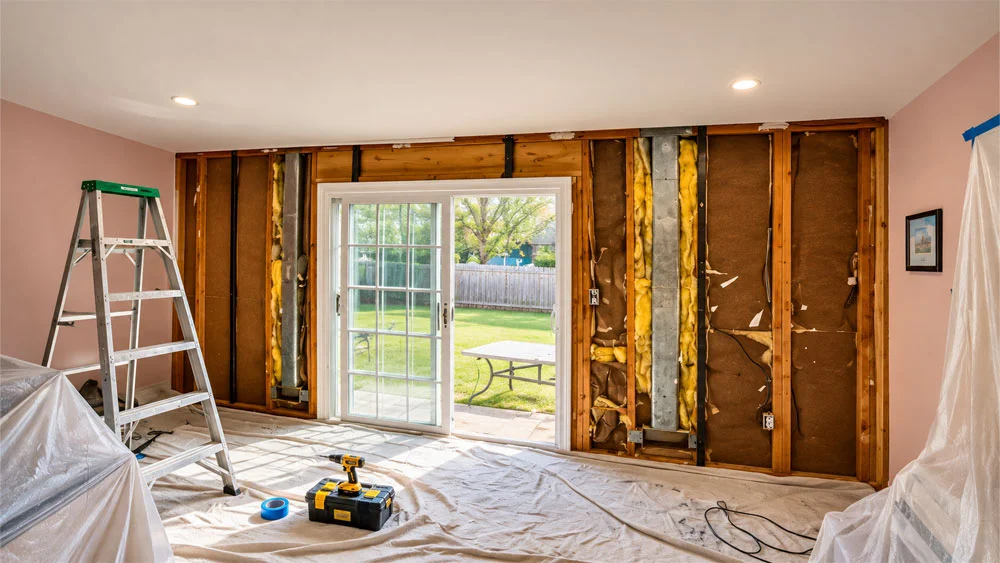
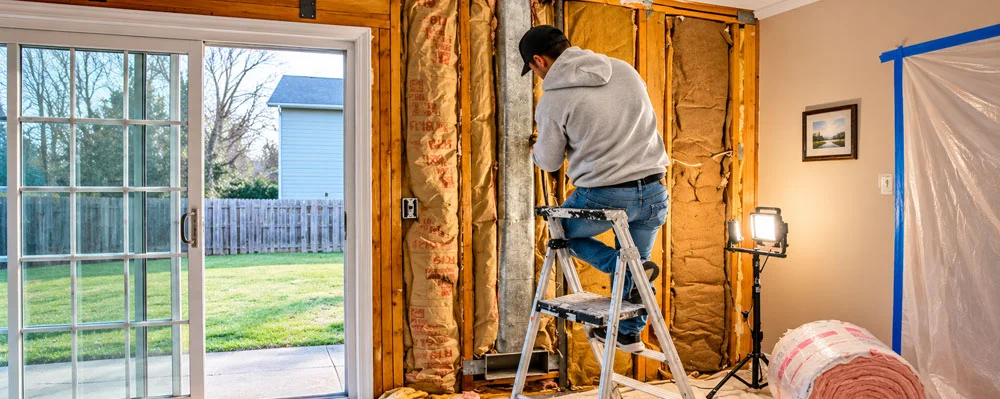
Once the immediate situation is controlled, affected building materials must be assessed.
Professionals may examine drywall, insulation, flooring, subfloors, cabinetry, ceilings, and framing.
The extent of damage is not always visible from the surface.
The assessment should consider both the physical condition of materials and whether moisture remains inside the affected areas.
Water can travel beneath flooring, behind baseboards, and into wall cavities.
Moisture meters and other assessment tools may help identify areas requiring additional investigation.
Before reconstruction, hidden moisture problems should be resolved to reduce the risk of deterioration after repairs.
Learn more in our guide, Hidden Water Damage NJ: 6 Risks You Shouldn’t Ignore.
Installing new drywall or flooring before affected materials are sufficiently dry can create additional problems.
Professional drying may involve air movers, dehumidifiers, humidity measurements, and moisture monitoring.
Drying requirements vary depending on the materials and severity of exposure.
The affected areas should be evaluated before rebuilding begins.
Excess moisture can create conditions that support mold growth.
However, not all water damage involves the same contamination risks.
Clean-water leaks, sewage backups, and storm flooding may require different safety and remediation procedures.
When significant contamination or mold is present, appropriately qualified professionals should address those conditions before reconstruction.
For more information, consult the EPA’s guide to mold and moisture.
Not every water-damaged component must automatically be replaced.
Decisions depend on the material, exposure duration, contamination, structural condition, and drying results.
Some surfaces may be suitable for repair, while swollen flooring, deteriorated drywall, or damaged insulation may require removal.
A careful assessment helps homeowners avoid unnecessary replacement without compromising safety or durability.
After mitigation, drying, and any necessary remediation are complete, reconstruction can begin.
Depending on the project, repairs may include:
Drywall and ceiling replacement.
Flooring and subfloor repairs.
Painting and trim installation.
Cabinet and finish carpentry repairs.
Insulation replacement.
Ori Home Improvement provides water damage-related home repairs and renovation services throughout Central New Jersey.
Our team focuses on restoring affected areas with careful workmanship and attention to detail.
Before closing out the project, review the completed repairs and confirm that the original water source has been addressed.
Check repaired finishes, flooring transitions, trim, and other affected areas.
Preventive maintenance can also help reduce future problems.
Regularly inspect plumbing connections, appliance hoses, roofing, gutters, and drainage around your home.
For recurring moisture issues, investigate the underlying cause rather than repeatedly repairing visible symptoms.
Ori Home Improvement serves homeowners in Princeton, West Windsor, Plainsboro, Skillman, Belle Mead, Montgomery, and surrounding communities.
With over 20 years of industry experience, we provide drywall repairs, flooring replacement, painting, trim work, and residential renovation services.
Our estimates generally cover labor, allowing homeowners flexibility when selecting replacement materials and finishes.
We focus on the repair and reconstruction stages. Emergency extraction, specialized drying, and contamination remediation should be completed by appropriately qualified providers when required.
Mitigation limits additional damage through water removal and drying. Restoration repairs or replaces damaged materials after the property is ready for reconstruction.
Timelines depend on the extent of damage, drying requirements, material availability, and repair complexity. Some projects take days, while extensive restoration can take weeks or longer.
It depends on the moisture exposure, contamination, and material condition. Severely damaged or contaminated drywall may need replacement.
Coverage depends on your policy and the cause of the damage. Contact your insurance provider to confirm applicable coverage and documentation requirements.
Understanding the Water Damage Repair Process NJ homeowners may face helps clarify the steps between water mitigation and completed repairs.
Proper assessment, drying, material selection, and reconstruction all contribute to a durable result.
Need help repairing water-damaged areas?
Contact Ori Home Improvement to discuss your project and request a consultation.
Call (609) 366-4811
Proudly serving homeowners throughout Central New Jersey.

| Professional remodeling services in Central New Jersey.


Monday – Friday
8:00 AM – 5:00 PM
Saturday
8:00 AM – 1:00 PM